Robotic Technology: Rewiring the Brain, Rebuilding the Body
At NeuroChangers Rehabilitation, we believe that recovery remains possible throughout life. The brain has the remarkable ability to adapt and reorganise. This is known as neuroplasticity. To activate neuroplasticity, the brain needs meaningful, repeated and well-directed movement practice. This is called motor learning.
Motor learning requires:
- Repetition of the correct movement
- Clear feedback on how the movement is performed
- Tasks that are purposeful and goal-driven
- Active participation and attention
- Practice that connects to real-life functional activities
Our approach combines skilled physiotherapy with robotic and sensor-based therapy systems that encourage high quality and high repetition movement training. This creates an engaging and supportive environment where clients can rebuild confidence, skill and independence.
The following examples represent common areas where this approach is helpful, however use of these technologies is not limited to these conditions:
- Stroke
- Brain Injury
- Parkinson’s Disease and other movement disorders
- Multiple Sclerosis
- Cerebral Palsy
- Developmental motor coordination challenges
- Spinal cord and peripheral nerve injuries
- Post-operative and musculoskeletal rehabilitation
- Age-related weakness, balance changes and falls risk
- Intellectual Disability, Autism and ADHD, to support attention and sensory-motor learning
Our focus is always on improving real-life functional ability, whether that is walking, reaching, standing, dressing, handwriting, feeding, or moving with more confidence.
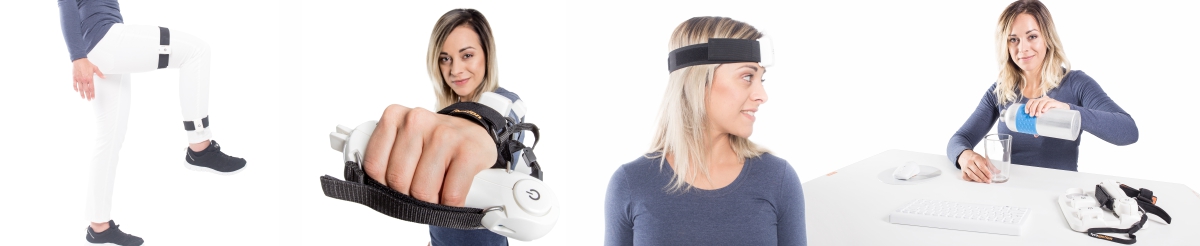
PABLO®: Interactive Upper and Lower Limb Movement Re-Training
PABLO is a sensor-based rehabilitation system that assists with the re-training of movement in the hand, wrist, elbow, shoulder, trunk and lower limbs. It detects even very small movement, allowing progress to be visible and rewarding.
How PABLO Supports Recovery and Motor Learning
- Provides visual and auditory feedback to refine movement quality
- Encourages high repetition, which strengthens neural pathways
- Allows therapy to be adjusted to each person’s ability and recovery stage
- Supports bilateral training to assist the reintegration of weaker pathways
- Promotes active participation and attention during therapy
Clinical and Functional Benefits
- Improved hand and arm coordination
- Increased trunk stability and posture
- Better control during reaching and daily self-care tasks
- Smoother movement patterns and improved confidence
- Increased ability to use the affected limb in daily activities
PABLO can be used with adults and children, and is suitable across early, intermediate and long-term rehabilitation.
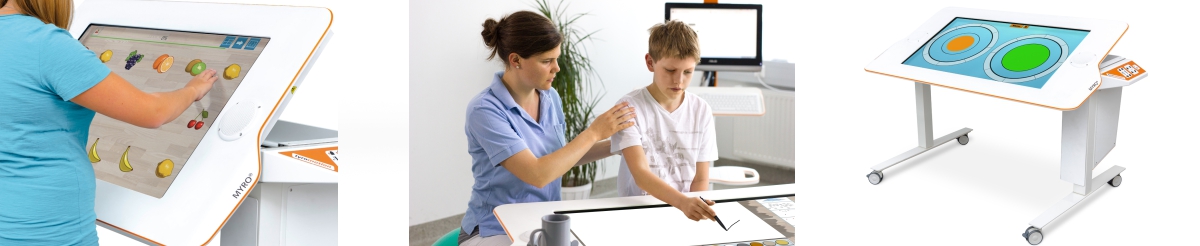
MYRO®: Task-Oriented Therapy for Functional Arm and Trunk Control
MYRO is a touch-sensitive and object-interactive therapy platform designed to retrain meaningful movement. Rather than exercising in isolation, clients practise movements through tasks that reflect real-life activities.
How MYRO Supports Recovery and Motor Learning
- Encourages problem solving and planning during movement
- Supports whole movement patterns for natural coordination
- Enhances sensory awareness and spatial perception
- Allows both one-sided and two-sided movement retraining
- Builds motivation and confidence through achievable challenges
Clinical and Functional Benefits
- Improved control of grasp and release
- Greater reach and range of motion
- Enhanced hand-eye coordination and attention
- Increased postural control and core stability
- Better carryover to everyday functional tasks
MYRO is suitable for neurological, musculoskeletal, developmental and age-related rehabilitation needs.
Why This Approach Works
Our technology sessions are always guided by an experienced physiotherapist who provides:
- Skilled facilitation and movement cueing
- Exercise selection based on motor learning and neuroplasticity principles
- Functional task training linked to daily goals
- Home practice strategies for continued progress
- Clear review and documentation for families, referrers and NDIS planning
This ensures that improvements made in the clinic lead to greater independence in everyday life.